
Beyond Both Sides: 2025’s Most Important Stories in Michigan
by Chris Moyer
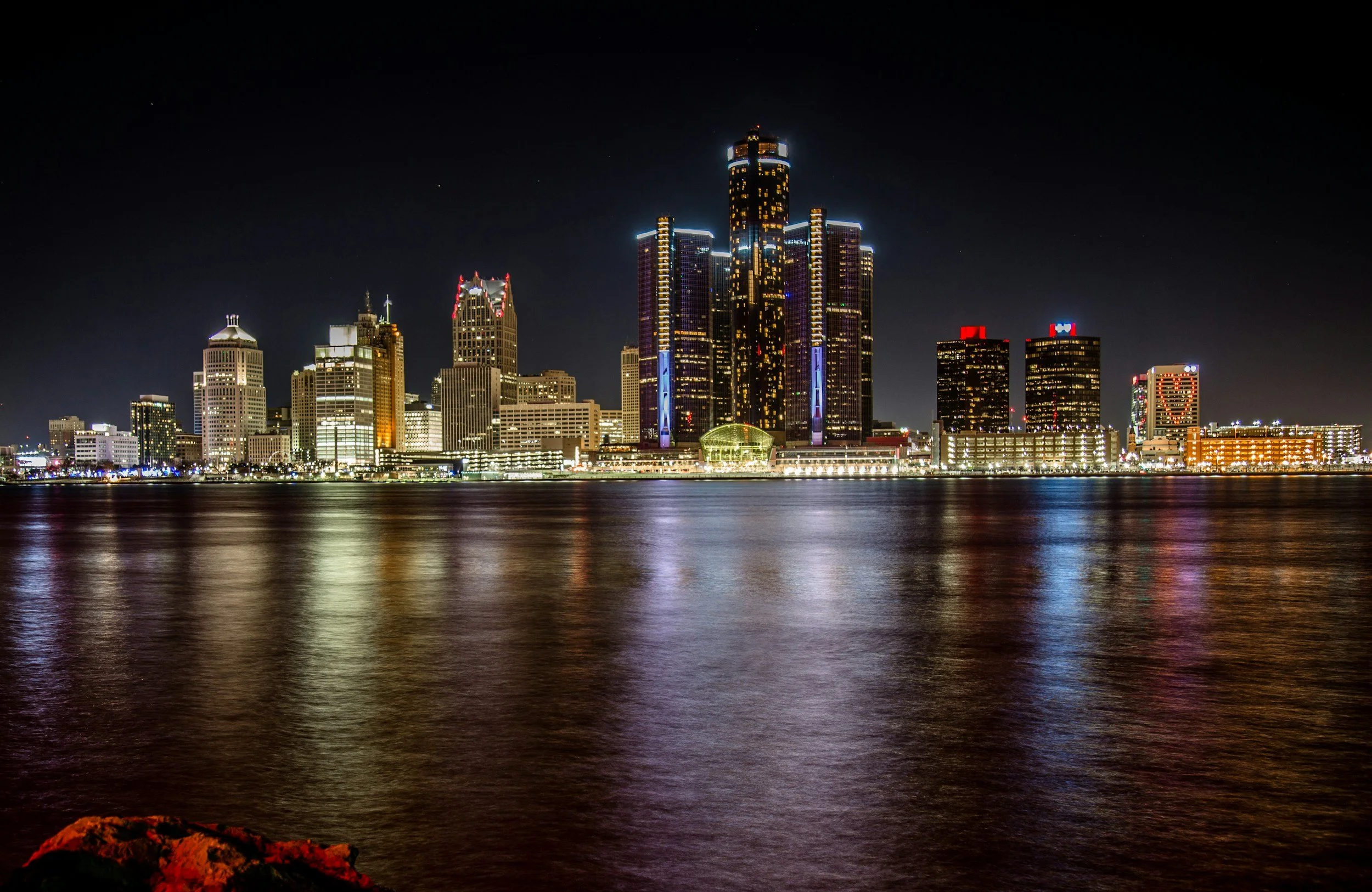
Looking back, 2025 will not be remembered as a year of singular transformation. It will be remembered as a year when Michigan repeatedly relied on last minute negotiations to prevent failure, even as meaningful history was made with the election of Mary Sheffield and early commitments hinted at more transformative change still ahead.
That tension defined nearly every major story of the year. Michigan did not move boldly forward, but it also did not collapse. Instead, it governed defensively, stabilizing existing systems while hesitating to fully reimagine them.
On Beyond Both Sides, Allie Walker and I spent the year interrogating that space between prevention and possibility. These ten stories explain how Michigan arrived there, and what it revealed about the state’s capacity to adapt.
1. Divided Government in Lansing
Divided government set the tone for everything that followed.
With Republicans controlling the House, Democrats holding the Senate, and Governor Whitmer in the executive, Lansing entered 2025 without a governing center of gravity. Legislative output dropped to historic lows. Budget negotiations stretched for months. Michigan missed its constitutional deadline and relied on last minute agreements to keep government functioning.
The significance was not gridlock itself. It was what gridlock produced. Planning gave way to brinkmanship. Long term strategy was displaced by short term damage control.
Michigan did not govern to advance priorities. It governed to avoid collapse.
2. The Last Minute Wage and Paid Sick Leave Deal
No story captured that dynamic more clearly than minimum wage and paid sick leave.
Facing court ordered changes, lawmakers delayed action until the final hours. A bipartisan compromise emerged just in time, narrowly avoiding sweeping changes that many employers warned would cause immediate disruption. Governor Whitmer signed the deal under deadline pressure.
The policy outcome mattered, but the process mattered more. This was not deliberative governance. It was emergency governance. Michigan proved it could still reach agreement, but only when failure was imminent.
The deal reflected the year’s broader pattern. Progress was possible, but only as a byproduct of crisis.
3. The Northern Michigan Ice Storm
The ice storm that struck Northern Michigan in March was the most consequential non political event of the year.
Communities lost power for weeks. Roads were closed. Forests were damaged. Tourism and local economies suffered long after the ice melted. Recovery extended well into the summer.
What made the storm significant was not just its scale, but its familiarity. Michigan’s systems are increasingly tested by events they were not designed to withstand.
The response succeeded in preventing catastrophe, but it also exposed limits. The storm underscored how much of Michigan’s infrastructure strategy remains reactive rather than anticipatory.
4. Tariff Shock and Auto Industry Anxiety
Trade policy once again demonstrated how vulnerable Michigan remains to external forces.
Tariffs and uncertainty disrupted production, delayed investments, and triggered temporary layoffs across the auto supply chain. Workers felt the effects immediately.
Michigan avoided a full-scale economic shock, but only barely. The year reinforced how tightly the state’s fortunes remain bound to federal decisions and global markets it cannot control.
The automotive industry and other businesses in Michigan have been able to stabilize, but for a return to strong growth they will need a stable political landscape.
5. The Governor’s Race Starts Early
With Governor Whitmer term limited, the next election cycle began shaping policy well before most voters were paying attention.
A crowded Republican primary took form early. Democrats positioned their own contenders. Detroit Mayor Mike Duggan entered the race as an independent, altering assumptions about the general election.
The effect on governance was subtle but real. Policymaking became more cautious. Risk avoidance increased. Decisions were filtered through future campaign implications.
Michigan did not stop governing, but it governed with one eye on the exit.
6. Detroit Elects Mary Sheffield
Against that backdrop of defensive politics, Detroit delivered one of the year’s clearest forward-looking moments.
Voters elected Mary Sheffield as the city’s first woman mayor, marking a generational shift in leadership. Emerging from a crowded field, she won decisively.
The significance went beyond symbolism. The election signaled a redefinition of leadership priorities and political expectations in Michigan’s largest city.
While much of the state focused on preventing failure, Detroit made history by choosing change.
7. The Road Funding Package
After years of debate, Michigan finally enacted a major road funding plan.
The package combined a wholesale marijuana tax, redirected fuel tax revenue, and a structure designed to generate roughly $1.8 billion annually once fully implemented.
It was a meaningful achievement, but a cautious one. Questions remain about whether the funding is sufficient and how quickly it will reach roads. The plan avoided continued deterioration, but it stopped short of a comprehensive solution.
The outcome reflected the year’s governing style. Fix what is breaking. Defer the rest.
8. Ford’s EV Pullback
Ford’s decision to scale back electric vehicle investments punctured many assumptions about Michigan’s industrial transition.
The company took a significant charge tied to canceled and delayed projects and pivoted toward hybrids and extended range vehicles. Market realities, policy uncertainty, and cost pressures forced a recalibration.
Michigan avoided an immediate economic hit, but the episode clarified how uncertain the transition remains. The future is still electric, but it is neither linear nor guaranteed.
9. Scrutiny of the MEDC
Economic development policy moved from background consensus to active debate.
The MEDC faced scrutiny over incentives, transparency, and a high-profile grant tied to an investigation. The conversation expanded into broader questions about accountability and return on investment.
Michigan did not abandon its development strategy, but it began questioning it more openly. That shift itself was notable.
The state avoided scandal, but it did not escape skepticism.
10. The Future of the Renaissance Center
Few stories captured the year’s underlying tension more clearly than the uncertainty surrounding the Renaissance Center.
As General Motors reconsidered its real estate footprint, the future of the RenCen became unclear. Once a symbol of modern ambition, it now stands at an inflection point.
The building became a metaphor for the year. A legacy asset sustained just long enough to decide what comes next.
A Look to 2026
As 2025 comes to a close, these stories also mark the first chapter of Beyond Both Sides. Across our first ten episodes, Allie Walker, John Truscott, and Ryan Gajewski, and I set out to slow the conversation down and examine how Michigan actually governs, communicates, and disagrees.
We look forward to being back in 2026 to explore the most important political and communications stories shaping Michigan, and to continue asking how policy leaders can agree and disagree better in service of the people they represent.